
Dar es Salaam Expands Regional Logistics Ambitions
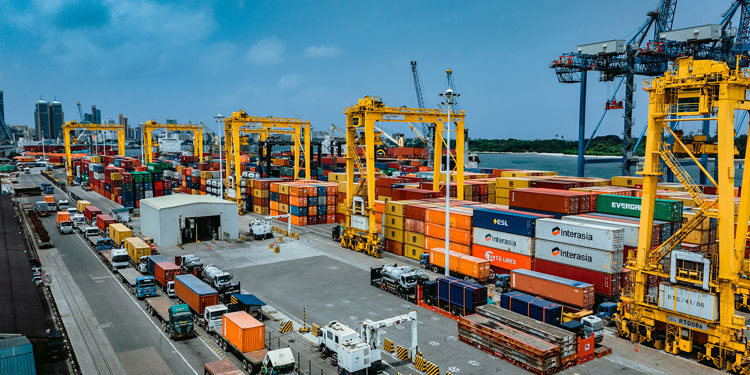
Tanzania continued strengthening its position as a regional logistics contender in February, with renewed focus on expanding the Dar es Salaam corridor and attracting more transit cargo from neighboring countries. As infrastructure upgrades and port efficiency initiatives gather pace, competition between East Africa’s major gateways is becoming increasingly visible.
For years, Mombasa has held the advantage as the region’s dominant trade gateway into Uganda, Rwanda, Burundi, and eastern DRC. But Dar es Salaam’s growing capacity, coupled with road and rail investments inland, is gradually reshaping regional routing conversations.
For cargo owners, the decision is becoming less about geography alone and more about reliability, cost-to-serve, customs efficiency, and inland turnaround times. Even marginal reductions in transit delays can significantly affect landed costs, working capital cycles, and customer service levels.
The broader implication is healthy competition. As East African corridors compete for cargo, logistics operators across the region are being pushed toward better coordination, faster processing, and stronger customer responsiveness.
Regional Rail Conversations Return to Focus as East Africa Eyes Deeper Connectivity
Regional rail connectivity returned to the spotlight in February as discussions around East Africa’s long-term transport integration continued gaining momentum. Attention once again turned toward Standard Gauge Railway (SGR) expansion ambitions, cross-border linkage conversations, and the wider role rail could play in improving inland cargo movement across the region.
Kenya, Uganda, and Tanzania all continue pursuing rail-led strategies aimed at reducing transport costs, easing pressure on road networks, and improving cargo predictability between ports and inland markets.
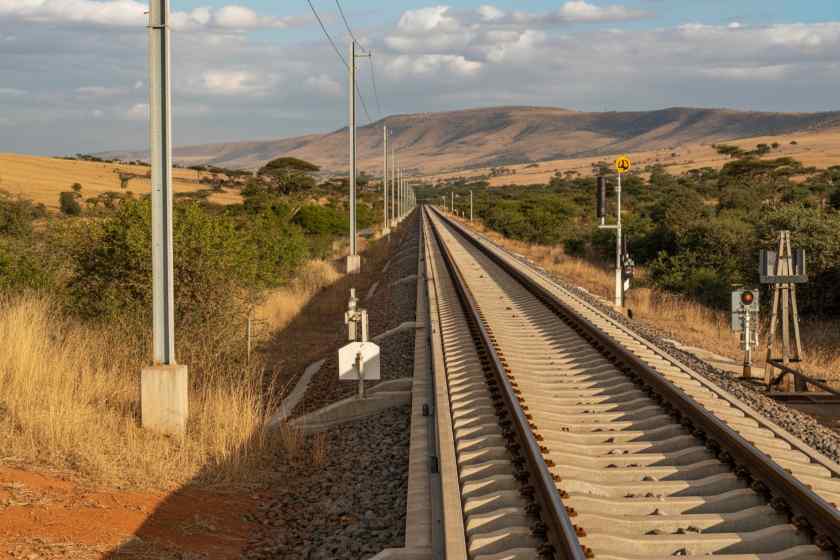
For logistics operators, the importance of rail goes far beyond infrastructure headlines. More efficient inland cargo movement could significantly reshape regional supply-chain economics — particularly for bulk cargo, containerized freight, and long-distance transit into markets such as Uganda, Rwanda, South Sudan, and eastern DRC.
Transporters and cargo owners are increasingly focused on overall corridor efficiency rather than individual transport legs. Faster inland connectivity can reduce fuel exposure, improve delivery planning, and create more stable transit timelines for regional trade flows.
Tanzania’s continued investment in rail infrastructure has also intensified regional competitiveness. As multiple East African corridors improve simultaneously, ports and inland logistics networks are increasingly competing as integrated ecosystems rather than isolated assets.
While many of these projects remain long-term in nature, the direction is becoming clearer: East Africa’s future trade competitiveness will depend heavily on how effectively ports, rail, roads, warehouses, and border systems connect into a single coordinated logistics network.
Kenyan 3PLs Accelerate Technology Adoption as Client Expectations Rise
February also highlighted a broader trend quietly reshaping East Africa’s logistics sector: the rapid shift toward technology-enabled operations.
As customers demand faster reporting, tighter inventory accuracy, and more transparent delivery performance, many Kenyan 3PL providers are increasingly investing in digital tools to improve operational control. Warehouse Management Systems (WMS), Transport Management Systems (TMS), analytics dashboards, and telematics platforms are becoming more common across modern supply chains.

For clients, the expectation is no longer simply storage and transport. Increasingly, they want visibility — accurate stock reporting, live delivery tracking, measurable KPIs, and proactive communication when disruptions occur.
The pressure is especially strong in sectors like FMCG, pharmaceuticals, and perishables, where timing and inventory precision directly affect sales performance and product quality.
What was once considered “advanced logistics capability” is gradually becoming operational baseline. Companies still relying heavily on manual processes may increasingly struggle to compete on responsiveness and reporting consistency.
At Freight Forwarders Solutions (FFS), warehouse operations are fully system-driven through Infor WMS, while Power BI dashboards and Mix Telematics tracking systems help strengthen operational visibility across warehousing and transport functions. As logistics networks become more time-sensitive, investments in operational intelligence and real-time visibility are steadily becoming part of the industry’s standard operating model rather than a competitive luxury.
The shift reflects a larger evolution taking place across East Africa’s supply-chain environment: logistics providers are no longer competing purely on fleet size or warehouse space, but increasingly on information quality, speed of decision-making, and operational predictability.